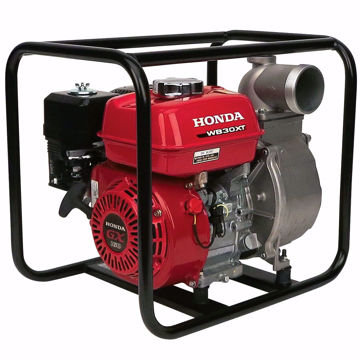
Honda WT20XK4A
The Honda WT20XK4A is a durable 2-inch trash water pump powered by a 163 cc GX160 engine, capable of handling up to 185 gallons per minute and solids up to 13/16 inch, making it ideal for dewatering, construction sites, and other applications involving dirty or debris-laden water; it can draw water from a suction lift of up to 26 feet and push it vertically to a total head of approximately 85 feet, providing strong performance even under demanding conditions. For optimal efficiency, the pump should be positioned as close to the water source as possible, using a reinforced, non-collapsible suction hose and ensuring all fittings and clamps are airtight to prevent air leaks that can interfere with priming. Priming is performed via the built-in port, which typically requires 60–65 seconds at a moderate suction lift, and care should be taken to ensure no air enters the system. The discharge hose should match the 2-inch port, be routed with minimal sharp bends, and be firmly clamped to prevent blow-offs, while avoiding excessive vertical rises that reduce flow and strain the engine. The engine should be fueled with fresh gasoline, and oil levels should be checked prior to operation to prevent activation of the Oil Alert system, which automatically shuts down the engine if oil is too low; after use, running the pump briefly to flush out residual water helps protect the silicon-carbide mechanical seal and impeller from corrosion. Routine maintenance, including cleaning the intake strainer, inspecting the conical cast-iron impeller, volute, and wear plate, and following the engine oil change schedule, ensures sustained performance and longevity. Common troubleshooting involves inspecting suction hoses and fittings if the pump fails to prime, cleaning the strainer or checking the impeller if discharge is weak, bleeding air from the system if the pump pulses or surges, and verifying fuel quality, spark plug condition, or oil level if the engine does not start or shuts off unexpectedly. Safety practices include operating on a stable, level surface, wearing eye and hand protection when handling hoses under pressure, never running the pump dry, and thoroughly draining the pump before freezing conditions to prevent damage. By carefully setting up the suction and discharge lines, properly priming the pump, maintaining the engine and pump components, and observing safety precautions, the WT20XK4A provides reliable, high-efficiency pumping for demanding dirty-water applications.
Key Specs & Discharge Capabilities
- Engine: Honda GX160, 163 cc.
- Pump type: Trash centrifugal, self-priming.
- Volute: Rigid-mounted cast iron with a stainless wear plate for durability.
- Impeller: Conical cast iron helps with solid handling and efficient flow.
- Mechanical seal: Silicon carbide on both pump case and impeller; very durable and wear-resistant.
- Priming time: ~60–65 seconds at a suction lift of 16.4 ft.
- Discharge capacity: ~185 gallons per minute (GPM).
- Ports: 2″ inlet (suction) and 2″ discharge.
- Total head (vertical lift capability): ~85 ft.
- Suction head lift: ~26 ft.
- Maximum pressure: ~37 psi.
- Solids handling: Can pass solids up to 13/16 in (about 20–21 mm).
- Fuel capacity: ~0.82 gallons.
- Run time (at max discharge): ~1.5 hours.
- Dry weight: ~104 lb.
- Protection: Equipped with Honda Oil Alert, which shuts down the engine if oil is too low.
Tips for Best Efficiency & Use
- Placement / Setup
- Position the pump as close to the source of water (trash water, muddy water, etc.) as possible to reduce suction losses.
- Use a non-collapsible, rigid suction hose. Because it's a trash pump, you want a hose that can handle some solids and doesn’t collapse under vacuum.
- Secure all hose clamps and fittings tightly especially on the suction side to avoid air leaks that can impair priming.
- Priming
- Use the built-in priming port to fill the pump with water before starting. Given the priming time (~60–65 seconds at 16.4 ft), be patient and allow it to fully prime.
- While priming, watch for any signs of air entering the system (bubbles, hissing) air leaks will make stable priming difficult.
- Discharge Line
- Use a 2″ discharge hose (to match the 2″ port) to maintain high flow.
- Minimize sharp bends, kinks, and excessive vertical rises in your discharge path — these create pressure losses and reduce efficiency.
- Use strong, properly sized clamps on the discharge outlet to prevent the hose from coming loose under pressure.
- Engine Operation
- Use clean, fresh gasoline because this pump draws a lot of water and runs at a decent load, fuel quality matters.
- Check the oil level before operation. Since there's an Oil Alert system, low oil will cause the engine to shut off.
- After pumping, run the pump briefly at moderate flow (if possible) to clear out residual water. This helps protect the mechanical seal and internal components from corrosion.
- Maintenance
- Regularly clean the intake strainer to remove debris and prevent clogging. The strainer is heavy-duty, but debris will still affect performance.
- Periodically inspect the impeller and volute; the conical cast iron impeller is robust, but abrasives or sediment can cause wear.
- Monitor and replace the wear plate (if needed) the stainless wear plate helps with durability, but over time with abrasive material, it could wear.
- Check all bolts, mounts, and frame structure; vibration can loosen things over time, especially under heavy use.
Troubleshooting Common Issues
| Problem | Possible Cause(s) | What to Do |
|---|
| Pump won’t prime / loses prime | Air leak on suction side, loose clamp, hose collapse | Inspect suction hose and connections, tighten clamps, re-prime the pump, check the strainer / in-line foot valve (if used). |
| Low flow or weak discharge | Clogged strainer, worn impeller, too much head (vertical lift), hose restriction | Clean strainer, inspect impeller for damage, use a less restrictive discharge hose, reduce discharge head if possible. |
| Engine shuts off unexpectedly | Low oil (Oil Alert), high vibration, uneven surface | Check oil level, make sure pump is on level ground, inspect engine mounts, verify no major vibration |
| Pump pulses or surges | Air entrainment, suction-side leaks, foot valve issue | Bleed air out through priming port, re-check suction connections, check foot valve (if installed) to ensure proper operation. |
| Engine won’t start / hard to start | Fuel issue, spark plug, carb flooding, choke mis-set | Use fresh fuel, inspect and clean or replace the spark plug, ensure choke is set correctly, verify proper throttle settings. |
Safety & Best Practices
- Always operate the pump on a stable, level surface. Because of the Oil Alert system, the engine may shut off if tilted too much.
- Wear eye protection and gloves when connecting or disconnecting hoses, especially when under pressure, water (or air) can burst out.
- Do not run the pump dry; doing so can severely damage the mechanical seal (silicon carbide) and shorten its life.
- For dirty or trash water: make sure the solids are within the pump’s capacity (up to ~13/16″) to prevent clogging or damage.
- If storing or using in cold climates, drain the pump and hoses thoroughly after use to avoid freeze damage.
- Use the full frame protection (if included) to secure the pump during operation and transport.
Summary
The Honda WT20XK4A is a rugged, high-performance 2″ trash pump built to handle dirty water with solid content thanks to its heavy-duty cast-iron impeller and volute, and a reliable GX160 engine. With a discharge capacity of around 185 GPM, up to 13/16‑inch solids handling, and a self-priming design that only takes about a minute to prime, it's an excellent choice for construction, dewatering, or muck-shifting tasks. For best efficiency, you should minimize suction losses, properly prime the pump, use correctly sized hoses, and maintain the engine and pump internals. Troubleshooting usually centers on air leaks, flow issues from clogs or worn parts, or engine shutdowns from low oil but with good setup and care, it will provide strong, dependable performance.