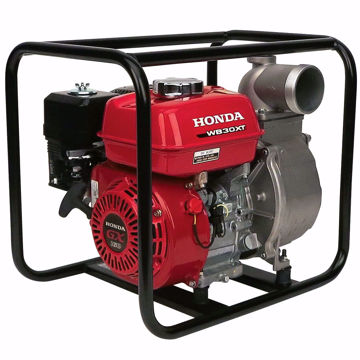
Honda WB20XT4A
The Honda WB20XT4A is a heavy-duty 2-inch general-purpose centrifugal water pump powered by a reliable 118 cc GX120 engine, capable of delivering up to 164 gallons per minute, making it suitable for irrigation, dewatering, and other high-volume water transfer tasks; it can draw water from a suction lift of up to 25 feet and push it vertically to a total head of 105 feet, providing strong performance for both residential and professional applications. For optimal efficiency, the pump should be positioned as close as possible to the water source to minimize suction loss, using a sturdy, non-collapsible suction hose and ensuring that all hose fittings are airtight, since air leaks on the suction side can prevent proper priming. The built-in priming port allows the operator to fill the pump with water before starting, and priming typically takes around 110 seconds at a moderate lift, with care taken to avoid air entering the system. The discharge hose should match the 2-inch port size, be routed with minimal bends, and be firmly clamped to prevent blow-offs under pressure, while avoiding excessive vertical elevation that could reduce flow. The engine should be fueled with fresh gasoline, and oil levels should be checked to prevent the Oil Alert system from shutting down the engine; after operation, it is recommended to briefly run the pump to flush out residual water, protecting the mechanical seal and impeller from corrosion. Regular maintenance, including cleaning the intake strainer, inspecting the impeller and mechanical seal, and changing engine oil according to Honda’s schedule, ensures continued performance and longevity. Common troubleshooting involves checking for suction leaks or collapsed hoses if the pump loses prime, cleaning the strainer or inspecting the impeller if discharge is weak, and verifying oil levels or spark plug condition if the engine fails to start or shuts off unexpectedly. Safety precautions include operating on a stable, level surface, wearing eye and hand protection when handling hoses under pressure, never running the pump dry, and fully draining it before freezing conditions to prevent damage. By carefully setting up the suction and discharge lines, properly priming the pump, maintaining the engine and pump components, and observing safety practices, the WB20XT4A delivers reliable, high-efficiency water pumping performance for demanding applications.
Key Specs & Discharge Capabilities
- Model: Honda WB20XT4A, 2″ general-purpose pump.
- Engine: Honda GX120, 118 cc (OHV), easy to start.
- Discharge capacity: ~164 gallons per minute (GPM).
- Pump type: Centrifugal, self-priming.
- Impeller: 4‑vane cast iron, designed for high efficiency.
- Mechanical seal: Silicon carbide on both pump case and impeller (very durable).
- Volute: Cast iron, rigid-mounted to reduce wear.
- Priming time: ~110 seconds at a suction lift of 16.4 ft.
- Suction port: 2″ NPT; Discharge port: 2″ NPT.
- Total head lift (how far vertically it can push water): 105 ft.
- Suction head lift (how far it can draw water up): 25 ft.
- Maximum pressure: about 45 psi.
- Strainer: Large, supports up to 8 mm solids, helps prevent clogging.
- Fuel capacity: 0.53 gallons.
- Run time at max discharge: ~1.7 hours.
- Dry weight: ~44 lb.
- Oil-protection: Has Honda Oil Alert, so the engine shuts off if oil is too low.
How to Use the WB20XT4A for Best Efficiency
- Setup & Positioning
- Place the pump as close as possible to your water source to minimize suction losses.
- Use a sturdy, non-collapsible suction hose. A hose that collapses under vacuum will reduce performance or make priming difficult.
- Secure all hose connections tightly to avoid air leaks; leaks on the suction side are especially problematic.
- Priming
- Use the pump’s priming port to fill with water before starting. Because priming takes ~110 seconds at ~16.4 ft lift, be patient when doing this.
- Monitor the suction side while priming any air getting in will make the pump lose prime or fail to prime completely.
- Discharge Line
- Use a discharge hose of sufficient diameter (2″ or matching the port) to minimize pressure drop.
- Avoid sharp bends or too many turns in the discharge hose, as these will lower flow.
- Ensure the discharge hose is firmly clamped to the pump outlet to avoid blow-offs under pressure.
- Engine Operation
- Use fresh, clean gasoline. The small fuel tank is only 0.53 gallons, so don’t expect super long run times at full load.
- Check oil level before each use, the Oil Alert system will shut the engine off if oil is too low, protecting the engine.
- After you’re done pumping, run the pump briefly (if possible) to flush out any remaining water. This helps reduce corrosion and prolongs the life of the mechanical seal.
- Maintenance
- Clean the strainer regularly to prevent debris from entering the pump and damaging the impeller or seal.
- Change engine oil per the owner’s manual schedule.
- Inspect the impeller, volute, and mechanical seal periodically, the silicon carbide seal is very durable, but wear or damage can still happen under heavy use.
- Keep the frame, engine mounts, and pump body clean and inspect for loose bolts or vibration damage.
Common Troubleshooting & Tips
| Issue | Potential Cause | What to Check / Do |
|---|
| Pump won’t prime or loses prime | Air leak in suction hose, loose clamp, collapsed hose | Check all suction fittings, make sure hose clamps are tight, inspect the suction hose for collapse, re-prime using the priming port. |
| Low flow / Weak discharge | Blocked strainer, worn impeller, too small discharge hose, too much head or lift | Clean the strainer, inspect impeller for wear, use a larger or shorter discharge hose, reduce vertical lift if possible. |
| Engine shuts off suddenly | Low oil triggering Oil Alert, pump vibration, or engine mounting issues | Check oil level, ensure the pump is on a level surface, make sure engine/pump mounts are solid. A common issue is the low oil sensor cutting power if tilted or not enough oil. Some users report it solved by leveling the unit and filling oil. |
| Pump pulses or surges | Air in the system, or suction restriction | Bleed air via priming port, check suction hose and fittings, verify foot valve (if used) is working properly. |
| Engine won’t start | Dirty or bad fuel, spark plug issue, flooding | Use fresh fuel, inspect and clean/replace spark plug, check carburetor, ensure choke is used correctly. |
Safety & Best Practices
- Stable Surface: Always run the pump on a stable, level base — instability can trigger low-oil shutoff or cause damage.
- Eye & Hand Protection: Use gloves and eye protection when connecting/disconnecting hoses — pressurized water or trapped air can spray unexpectedly.
- Don’t Run Dry: Running the pump without water can severely damage the mechanical seal.
- Winter / Storage: If storing in freezing conditions, make sure to fully drain water from the pump to prevent freeze damage.
- Tie‑Down: Use the full-frame protection (frame is heavy-duty) to secure the pump during transport or operation.
Bottom Line
The WB20XT4A is a powerful, reliable 2″ general-purpose pump with very good discharge capacity (164 GPM) and a strong, durable build (cast‑iron volute, silicon-carbide seal). To get the best efficiency out of it, make sure your setup minimizes suction losses, prime properly, use the right hose sizes, and maintain the engine and pump regularly. Troubleshooting is mostly about air leaks, priming issues, or engine oil-level problems, once you dial in those, the pump should run very reliably.