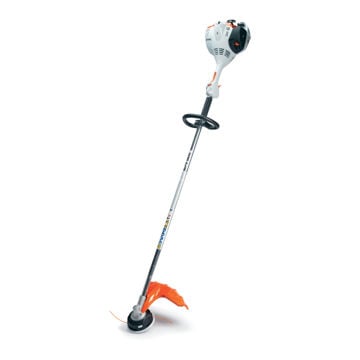
STIHL BR 200
The STIHL BR 200 is a lightweight, fuel-efficient backpack blower designed for homeowners and property caretakers who need professional-level power in an easy-to-handle package. Featuring a 27.2 cc low-emission 2-stroke engine that produces about 1.07 bhp, it delivers an airspeed of up to 150 mph and an air volume around 400 CFM, giving it more than enough strength to clear grass clippings, leaves, twigs, and light debris from yards up to 1 acre or slightly larger, depending on the terrain and tree coverage. Weighing just 12.6 lbs., the BR 200 is one of the lightest backpack blowers in its class, making it comfortable for extended use without straining the back or shoulders. The unit’s anti-vibration system and adjustable padded harness allow users to work for longer periods with minimal fatigue, while its single-hand multi-function control handle simplifies operation by integrating throttle control and stop switch into one easy grip. The large 35.5 oz fuel tank provides extended run time between refills, and its efficient engine design minimizes fuel consumption and emissions, making it ideal for both residential and light commercial cleanup tasks.
For troubleshooting, if the blower will not start, check that you are using a fresh 50:1 gas-to-oil mix, confirm the spark plug is clean and properly gapped, and make sure the choke lever and primer bulb are used correctly during startup. If the engine becomes flooded from over-priming, set the choke to open, pull the starter several times to clear excess fuel, and then retry. Poor performance or reduced airflow is often caused by a clogged air filter, blocked nozzle, or carbon buildup on the spark arrestor screen, clean or replace these components regularly. If the blower stalls or loses power, inspect the fuel filter and fuel lines for debris or wear, and ensure that the air intake vents and cooling fins are free of dust and leaves to prevent overheating. Vibration or excessive noise can indicate loose fittings, worn mounts, or buildup around the fan housing, which should be cleaned and tightened as part of routine care.
To achieve maximum efficiency, start by planning your workflow, begin at one end of the property and move methodically toward a designated collection point or perimeter, rather than blowing debris in random directions. The backpack design allows for smooth, continuous movement, so use slow, sweeping motions with the nozzle about 3–6 inches above the ground for optimal airflow without stirring up dust or losing control of light material. Use partial throttle for dry leaves or smaller debris to conserve fuel and reduce noise, reserving full power for dense, wet, or compacted piles. The BR 200 performs best on dry days, as wet leaves and grass require more force to move efficiently. After each use, wipe the exterior clean, check the air filter, and ensure that all vents and straps are free of debris or obstructions. For long-term storage, drain the fuel or add a stabilizer to prevent carburetor gumming.
With its strong air output, lightweight comfort, and easy maintenance, the STIHL BR 200 is one of the most practical and efficient backpack blowers for homeowners with medium to large yards. It combines durability, ergonomic design, and fuel efficiency to deliver dependable performance season after season, making yard cleanup faster, quieter, and less fatiguing.
Key Specifications
- Engine displacement: 27.2 cc (≈ 1.66 cu in)
- Engine power: ~0.8 kW / ~1.07 bhp
- Weight (without fuel): 5.7 kg (≈12.6 lbs.)
- Fuel capacity: 1050 cc (≈35.5 oz)
- Maximum air velocity: ~150 mph (67 m/s)
- Air volume at nozzle: ~400 CFM (≈680 m³/h)
- Blowing force: ~12 Newtons
- Sound pressure rating: ~70 dB(A)
- Features: Backpack design with anti-vibration system, single-hand multi-function control handle, comfortable harness for reducing fatigue.
Yard Size & Suitability
Given the specs above, here’s how the BR 200 maps to practical yard-use:
- With a backpack format, substantial air volume (~400 CFM) and high velocity (~150 mph), the BR 200 is well suited for medium-to-large residential properties where you have to cover yards, driveways, patios, walkways, and possibly heavier leaf or debris loads.
- Its weight (~12.6 lbs.) is still manageable for extended use, and the harness/backpack style frees up your hands and shoulders compared with a handheld top-heavy model, making it better for larger areas or longer sessions.
- If your yard is something like ½ acre to 1 acre (or somewhat more depending on tree cover/debris), it’s very suitable. For a small yard (~¼ acre) this blower may be more than strictly needed, nonetheless, the extra power will let you finish faster.
- For very large estates (several acres), or commercial-level debris loads (heavy mulch, deep leaf piles, extensive pine needle cover), you might step up to a higher‐CFM, professional model, but for most homeowners with significant cleanup needs, the BR 200 hits a sweet spot.
Troubleshooting Tips & Common Issues
Here are some common issues you may run into with the BR 200 (and what to check):
- Engine won’t start or hard to start
- Ensure you have the proper fuel (check if 2-stroke mix required per manual).
- Check that the primer bulb (if equipped) has been pressed enough to move fuel into the carb.
- Inspect the spark plug for fouling or wear, check gap.
- Make sure the air filter is clean; a clogged filter restricts air and makes start difficult.
- Confirm that the choke/throttle are correctly set per the manual.
- Loss of blowing force / weak airflow
- Inspect the blower tube/nozzle for obstructions (twigs, clumps of leaves).
- Check intake vents and cooling fins in the backpack unit, blocked airflow reduces engine power and thus blowing force.
- If leaves are wet, compacted, or the job is heavier than usual, expect reduced performance (even high-capacity models struggle more).
- Ensure you have the correct nozzle length/tube attachment and that it’s assembled properly.
- Excess vibration, noise, or overheating
- The anti-vibration system should reduce fatigue; if you feel unusual vibration, inspect harness straps, fasteners, or wear parts.
- Overheating may result if the engine’s cooling fins or housing are blocked by debris. Clean those areas.
- If noise increases unusually, check muffler and spark arrestor screen (if equipped) for carbon buildup or clogging.
- Fuel/engine running irregularly
- If engine sputters or stalls, fuel may be stale, carburetor may need adjustment, or filter may be clogged.
- After long storage, draining or stabilizing fuel is important to avoid gumming.
- For backpack blowers, harness fit matters: a poor fit can cause operator fatigue and slower work, making performance seem worse than it is.
How to Use for Best Efficiency
To get the most out of the BR 200, use the following best practice techniques:
- Plan your blowing path: Begin from one side of the yard or furthest point and blow toward a centralized collection area (pile, street edge, etc.). This avoids scattering debris back into already-cleared zones and reduces time.
- Use correct nozzle and distance: Keep the blower tube a few inches (3-6 inches) above the ground for optimal airflow and debris movement. Too close may drag or stir up dust; too far loses force.
- Leverage the backpack design: The harness allows you to stand upright and move freely. Use sweeping arcs rather than standing in one spot and move steadily across the yard rather than repeatedly blasting the same area.
- Match speed to task: If debris is light and dry, you may not need full throttle, a moderate speed will suffice, saving fuel and reducing exhaust/noise. Save full power for heavier loads, wet leaves, or dense clumps.
- Clear dry debris when possible: Dry leaves and yard waste are much easier to move. If possible, wait for dry weather rather than tackling wet, heavy loads that slow you down and fatigue you faster.
- Maintain the unit properly: Clean the air filter regularly, inspect the blower tube and nozzle for wear or damage, check the harness and support system. A well-maintained blower runs longer, more efficiently, and with less fatigue.
- Take breaks for long sessions: Even with a backpack design, if you’re working large areas, fatigue will accumulate. Make sure you’re comfortable, adjust straps/harness, use proper body posture.
- Be mindful of noise & surroundings: At ~70 dB(A), this blower is moderately loud. Use hearing protection for extended use, avoid early-morning disturbance in residential areas, and be considerate of neighbors.
- Storage & fuel care: When you’re done, allow the engine to cool, wipe down the unit, check for debris in vents or tubes, and store in a dry place. If storing long-term, either drain fuel or use stabilizer to avoid fuel system issues.