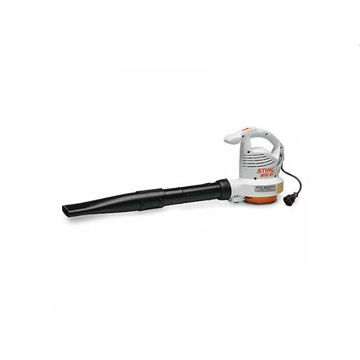
STIHL BGE 71 electric handheld blower
The STIHL BGE 71 electric handheld blower is a versatile, corded model built for homeowners who need quiet, consistent power for yard cleanup without the maintenance of gas equipment. Operating on a standard 120V electric outlet with a 9.2-amp motor, it produces up to 148 mph airspeed and about 285 CFM air volume, providing strong performance for clearing leaves, grass clippings, and light debris from yards up to about ¼–½ acre in size. Weighing only 6.8 pounds, it’s lightweight, easy to maneuver, and features a two-speed control switch conveniently located on the handle, allowing you to toggle between low power for light cleanup and high power for tougher debris. The built-in cord retainer prevents accidental unplugging, while the multi-function handle supports comfortable use for both right- and left-handed operators. Troubleshooting the BGE 71 is simple: if the blower won’t start, check that the extension cord is properly plugged in and that the cord gauge isn’t too thin or overly long, as low voltage can prevent the motor from running at full power. Confirm the outlet works by testing another device and make sure the on/off switch is engaged. If airflow seems weak, inspect the blower nozzle and intake vents for obstructions like leaves or twigs, and remove any buildup before restarting. Unusual vibration or noise may indicate a loose fan or debris trapped inside, so always unplug the blower before inspecting it. Should the unit overheat, give it time to cool and ensure the vents are clear; avoid running it for extended periods on high speed in heavy debris without rest. For best efficiency, start at one end of your yard and work in smooth, sweeping motions toward a single collection point rather than blowing debris randomly. Keep the nozzle a few inches off the ground to maintain maximum airflow and control and use low speed for light debris or near flower beds to prevent damage. Choose a heavy-duty, short extension cord (12- or 14-gauge) to maintain full power delivery and reduce voltage drop, especially for longer distances. The BGE 71 performs best on dry leaves and grass, as wet or compacted material may require extra passes. After use, unplug the blower, wipe it clean, check for debris near the vents, and store it in a dry place. With its quiet operation (as low as 58 dB(A) on low speed), minimal vibration, and zero emissions, the STIHL BGE 71 is an efficient, environmentally friendly choice for homeowners seeking dependable performance and easy handling for regular yard maintenance.
Key Specifications
- Power source: 120 V corded electric, draws 9.2 amps.
- Weight: ~6.8 lbs. (≈ 3.1 kg) (without cord)
- Two-speed functionality (low & high speeds) via handle-mounted switch.
- Blowing performance (high speed):
- Max air velocity: ~148 mph (≈ 66 m/sec)
- Air volume at nozzle: ~285 cfm (≈ 485 m³/h) at high speed
- Blowing force: ~9 Newtons (high speed)
- Sound pressure rating: ~64 dB(A) at high speed (≈58 dB(A) at low speed)
- Features: built-in cord retain / cable strain relief to prevent accidental unplugging, multi-function handle (usable for left/right hand)
Yard Size & Suitability
Given its specs, here’s how to interpret what size of yard or use-case the BGE 71 is suited for:
- With ~285 cfm and 148 mph top speed, the blower offers solid power for typical residential use: clearing leaves, grass clippings, light debris on patios, sidewalks, driveways.
- Because it is cordless (well, corded electric) and relatively lightweight (~6.8 lbs.), it is user-friendly for homeowners rather than heavy commercial use.
- The two-speed feature allows switching to lower speed (thus quieter, lower consumption) for lighter tasks and higher speed for heavier tasks.
- Range is limited by the power cord/extension you’ll use — so the size of your lawn and the area you need to cover matters.
- Conclusion: Best for small to moderate-sized residential yards (say up to ~¼-½ acre) where you want a reliable blower for seasonal leaf clean-up, sidewalks/driveways, moderate debris. If you had a large property (1+ acre) with heavy leaf drop, big pine-needle loads, etc., a higher-CFM model or backpack style might be more efficient.
Troubleshooting Tips & Common Issues
Here are common issues you may run into with the BGE 71 (or similar corded electric blowers) and how to troubleshoot:
- Unit doesn’t turn on / motor doesn’t run
- Check that the power cord is fully plugged into the outlet and the blower’s cord-retainer is engaged so the plug hasn’t slipped out.
- Verify the outlet is working (try another tool in it).
- Check your extension cord: too thin gauge, too long cord can cause voltage drop → the blower may struggle.
- Inspect the blower’s cable strain relief and the cord for damage.
- Make sure the switch is set to speed and properly toggled.
- Poor air volume / weak blowing force
- Check for blockages in the blower tube or nozzle that might reduce airflow.
- Check for blockages in the intake vents (dust/leaves can build up).
- Make sure you’re on the high-speed setting if needed.
- Again, check your extension cord: a long thin one will reduce blower performance by voltage drop.
- Consider that if debris is heavy (wet leaves) this model may require multiple passes.
- Excess noise / abnormal vibration / unusual sound
- Inspect blower tube for loose parts or cracks.
- Check if the fan inside is hitting something.
- Ensure the housing is intact and nothing is loose.
- If the motor itself is grinding or making unusual sounds, cease use and inspect for internal damage.
- Overheating / blower shuts off or struggles
- Ensure intake vents are clear and not blocked with debris/dust.
- Avoid continuous long runs in heavy debris without giving the motor a break.
- Check cord gauge & extension length: as above, if cord causes voltage drop the motor may overheat.
- Cord or plug issues
- Because it is a corded model, a damaged cord is a safety hazard. Inspect for cuts/frays.
- Keep the cord away from the blower’s airflow output so you’re not blowing debris onto the cord or tripping over it.
Best Practices for Efficient Use
To get the most out of your BGE 71 and work efficiently, follow these tips:
- Plan your work path: Start from an edge of your yard and blow debris toward a collection point (pile, bag, etc.). This avoids blowing debris into already-cleared areas.
- Use the right speed setting: For light debris (dry leaves, small yard) you can use the low-speed setting (quieter, less energy). For heavier loads use high speed.
- Use the nozzle at correct distance: Keep the nozzle a few inches above the ground surface; too high and air loses impact, too low and you might hit the ground surface or reduce efficiency.
- Sweep rather than blast everything: A steady sweeping motion is often more efficient than standing in one spot and blasting. With the two-speed you can slow your pace when needed.
- Use proper extension cord: Because this is 120 V, corded, make sure your extension cord is heavy enough gauge (lower number = thicker cord) and as short as practical to minimize voltage drop and maintain full performance.
- Avoid working with wet leaves if you can: Dry leaves blow much easier. Wet leaves are heavier, clump, stick to surfaces — so they take more time and effort.
- Clean up periodically: After your blowing session, unplug and wipe down the blower. Clear any stuck debris on the intake or nozzle. Store in a dry place.
- Use quieter mode where possible: For early morning or neighborhood use, start with low speed so you’re less disruptive. The BGE 71 has relatively low noise (58 dB(A) at low speed) so that helps.
- Maintain clear inlets/vents: Since it’s electric and has brushless motor, maintenance is minimal but still keep inlets clear to allow proper cooling and airflow.