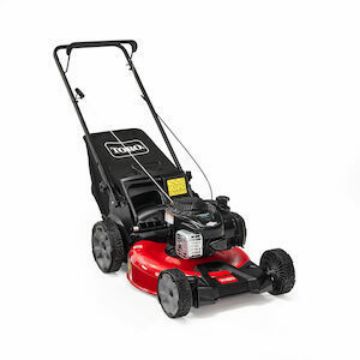
Toro 21621 60V MAX Stripe™ 21-inch self-propelled mower
The Toro 21621 60V MAX Stripe™ 21-inch self-propelled mower is built for homeowners who want professional-looking lawn results with minimal effort and maintenance. Powered by Toro’s 60V Flex-Force battery system, it delivers strong, quiet performance without the noise, fumes, or upkeep of a gas engine. The mower comes with a 6.0Ah L324 lithium-ion battery that provides up to 60 minutes of runtime—enough for medium-sized lawns up to about half an acre—and recharges in roughly five hours. Its 21-inch cutting deck is made of lightweight, rust-resistant composite material, making it easy to maneuver while still offering a wide cut path. The Stripe™ mowing system integrated into the rear roller helps you create professional-looking striped patterns for a manicured finish. The variable-speed self-propelled drive automatically matches your walking pace for smoother operation, while the cutting height can be quickly adjusted from 1 to 4 inches to suit your lawn’s condition. Toro’s SmartStow® feature allows the mower to be stored vertically, saving up to 70% of space in the garage. For most efficient performance, it’s ideal to mow when the grass is dry and not overly long, as wet or thick grass can reduce battery life and airflow efficiency. Keeping the blade sharp and the underside of the deck clean will also improve cutting performance and battery runtime. If the mower won’t start, check that the battery is fully charged and properly seated, the safety bail is engaged, and the deck is free of debris. Short runtimes can indicate tall, thick grass or an aging battery, while uneven cuts are usually caused by dull blades or unbalanced wheel height settings. The self-propel feature should be inspected if it feels weak or unresponsive, check for jammed belts or worn drive parts. To maximize efficiency, follow a consistent mowing schedule and cut no more than one-third of the grass blade length at a time. Use the mulching mode for nutrient-rich lawn recycling during regular maintenance, and switch to bagging mode when the grass is heavy or wet to prevent clumping. Store the mower and battery in a cool, dry place and avoid leaving the battery fully discharged for long periods. With its blend of power, comfort, and smart features, the Toro 21621 delivers clean cuts, precise stripes, and dependable performance season after season, making it one of the most efficient and easy-to-maintain cordless mowers in Toro’s 60V lineup.
Specifications & Features (Model 21621)
- Drive type: Self-propelled, variable speed, “match-your-speed” drive (i.e. it adjusts to your walking pace)
- Cutting width / deck size: 21 inches (53 cm)
- Cutting height range: 1.0 into 4.0 in (2.5 cm to 10.2 cm)
- Deck construction: Polymer composite material (lightweight, corrosion-resistant)
- Battery / power: Comes with a 60V MAX L324 battery (6.0 Ah, 324 Wh)
- Estimated runtime: Up to 60 minutes (under ideal conditions)
- Top speed / drive rate: Up to 3.1 mph (4.9 km/h)
- Bagger (grass collection) capacity: 1.8 bushels
- Battery charge time: 300 minutes (5 hours) for a full charge (with the supplied charger)
- Blade tip speed / cutting performance spec: 14,000 to 18,000+ ft/min (4,267 to 5,486 m/min)
- Dimensions (approx. boxed): 45 in × 24.5 in × 17.25 in
- Storage feature: SmartStow vertical storage (i.e. can stand upright for space savings)
Yard Capabilities & Limitations
Best suited for:
- Residential lawns of medium size, up to perhaps ~½ acre, especially when you don’t have to mow the entire area in one battery charge. (It claims up to 60 minutes of runtime in favorable conditions.)
- Lawns with moderate slopes or uneven terrain. The self-propel feature helps reduce fatigue walking, and the lighter deck helps with maneuverability.
- Regular mowing schedules. The mower is more efficient when grass is kept under control (i.e. not letting it get extremely long before mowing).
- Mulching, bagging, or side discharge, depending on how you want to handle grass clippings (given clean deck and blades).
- Owners want lower maintenance than gas mowers — no oil changes, no spark plugs, etc
Limitations / caution points:
- On very large properties, you may need to pause to recharge or swap batteries, which reduces continuous mowing efficiency.
- Very thick, wet, or overgrown grass will stress the motor and battery more, reducing runtime and possibly causing clogs.
- Steep or rough terrain may challenge traction or self-propel drive (especially if battery power is low).
- The ~5-hour charge time means you must plan downtime if you intend to mow in multiple sessions in one day.
- Battery health degrades over time; runtime will drop over the years.
Troubleshooting & Common Issues
Here are some issues you might face and how to diagnose / fix them:
| Symptom | Possible Cause(s) | Troubleshooting Steps / Fixes |
|---|
| Mower won’t start or blades don’t spin | Battery is dead; battery not properly seated; safety bail or presence bar not engaged; wiring/contact issue | Charge the battery fully. Remove and reseat the battery, checking contact points. Check that the safety presence bar is held. Inspect connectors/wiring for damage. |
| Runtime too short / battery dies quickly | Battery aging or degraded; heavy load (thick grass, uphill); incomplete charge; inefficient mowing pattern | Test battery under light load; if capacity is significantly degraded, consider replacement. Mow in lighter grass conditions. Use efficient mowing paths, avoid unnecessary overlaps. |
| Uneven or poor cutting | Dull blade; bent blade; uneven deck height; low battery voltage | Sharpen or replace blade. Check for blade damage or imbalance. Adjust wheel heights to be even. Start mowing with full battery. |
| Deck clogging / grass buildup under deck | Wet grass; too much thatch; clippings stuck under deck; airflow restricted | Mow when grass is dry. Clean underside of deck after use. Remove any plugs or obstructions. Use sharper blades for better airflow. |
| Self-propel / drive not engaging or slipping | Drive mechanism jammed; belt or internal linkage worn; battery or motor output insufficient | Inspect the drive mechanism, belts, pulleys, or internal linkages. Clear obstructions. Ensure battery is supplying adequate voltage. |
| Battery won’t hold a charge | Battery cells failing; charger malfunction; battery stored improperly | Test battery voltage and capacity. Try a different charger if possible. Replace battery if cells have failed. Store battery per manufacturer’s guidelines (cool, moderate charge) when not in use. |
How to Use It for Best Efficiency & Longevity
To get maximum performance, runtime, and lifetime from the 21621, consider these best practices:
- Start with a full charge: Always begin mowing with a fully charged battery to get the most runtime and optimal power.
- Mow in favorable conditions: Try to mow when grass is dry and not overly long, to reduce load and avoid clogging.
- Follow the “one-third rule”: Do not cut more than ~⅓ of the grass blade length in a single pass, to reduce stress on mower and maintain lawn health.
- Use efficient mowing patterns: Plan straight, overlapping paths (rather than random back-and-forth) to reduce redundant coverage and conserve battery.
- Alternate modes as needed: Use mulching when grass is light and dry to recycle nutrients. Switch to bagging when grass is heavy or wet.
- Keep blades sharp & deck clean: Dull blades increase drag and power consumption. Clean out the underside of the deck frequently to maintain good airflow.
- Manage battery health: Store battery in a cool, dry environment. Avoid fully depleting or leaving fully discharged for long periods. If storing for extended time, keep it at partial state of charge as recommended by Toro.
- Inspect regularly: Periodically check bolts, belts, wheels, and drive components. Tighten anything loose and replace worn parts before failure.
- Use vertical storage: Take advantage of SmartStow vertical capability if you have limited space. Before storing upright, ensure the mower is clean and dry.
- Match battery and charger: Use the correct 60V L324 battery and compatible charger; mismatched or aftermarket units may degrade performance or damage battery.
- Avoid overexertion: If you hit very thick patches, slow down the walking pace or change to a lighter pass to reduce strain on motor and battery.