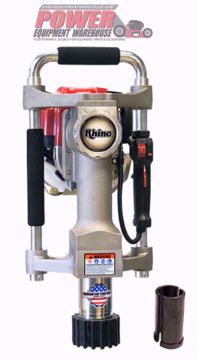
Rhino GPD‑30 Post Driver
Video: Honda Engine Shroud on Rhino Post Drivers
The Rhino GPD‑30 is a powerful, handheld gas-powered post driver built for driving T-posts, ground rods, and pins into a variety of soils, but its true efficiency depends heavily on the soil type: according to Rhino’s tech data, this driver is best suited for light to medium soils for example, sandy or humus-rich earth qualifies as “light,” while soils that have occasional gravel (up to ~1.5″), some clay, or light shale count as “medium,” but once you get into heavy, compacted, or dry soils (clay, heavy gravel, very dense compaction), the resistance rises dramatically and driving becomes much harder or slower. Rhino even recommends lightly wetting the ground in very dry or compacted areas before driving, because moisture helps the displaced soil compact beside the post more effectively, reducing driving time. When it comes to troubleshooting, you should follow the GPD‑30 owner’s manual closely: check the engine oil before each use, inspect and clean or replace the air filter, and make sure all fasteners are tight vibration from the hammer action can loosen bolts quickly. Inside the crankcase, there should be a liberal amount of Rhino-approved grease; if it’s low or discolored, service the hammer/anvil by pushing a dowel through the chuck tube to remove and inspect them. In operation, apply a steady downward pressure while engaging enough throttle to drive the hammer, and maintain a consistent rhythm don’t “jerk” the driver or pulse the throttle too aggressively as this helps each blow count. To maximize efficiency, especially in tougher soils, stabilize your post before driving (make sure it’s straight), water the driving area if it’s dry, and drive in controlled increments: pause occasionally to realign if needed, rather than trying to drive the full depth in one continuous run. After driving, inspect the hammer and anvil for wear, clean off any dirt or debris, grease appropriately, and store the unit upright per the manual’s recommendation (do not lay it on its engine or driver side) to avoid damaging internal components.
Soil-Type Capabilities
- According to Rhino’s technical data, their GPD‑30 is designed for light to medium soils by default (e.g., sand, humus-rich soil, or soil with some clay), since these soils have enough “voids” to allow displaced soil to compact around the post.
- Rhino defines light soil as things like beach sand or soil with a high organic content, medium soil as soil with occasional gravel (up to ~1.5″), some clay, or some shale, and heavy soil as compacted clay, heavy shale, or large gravel.
- The GPD‑30 is rated to “drive in multiple soil types and tough or frozen ground,” according to its spec sheet.
- For very hard or dry soils (“heavy, compacted, and/or dry”), Rhino’s own guidance suggests that driving difficulty increases in such cases, using a larger, more powerful driver may be more effective.
- Importantly: wetting dry or compact soil beforehand can significantly decrease driving times, because moisture helps the soil compact more easily next to the post as it displaces.
Troubleshooting Tips
Here’s how to address common issues with the GPD‑30:
- Starting / Engine Issues
- Check your oil level before every use. The manual specifically recommends this.
- Ensure the air filter is clean; a clogged filter can starve the engine of air and make starts or operation more difficult.
- Use fresh, quality fuel, stale or contaminated fuel often causes hard starting or poor performance.
- Follow the hot-restart procedure: according to the manual, when restarting a warm engine, you should pull gently on the starter until you feel resistance, then pull briskly.
- Hammer / Anvil Wear or Impact Problems
- Periodically inspect the hammer and anvil for wear. To do this, Rhino recommends inserting a dowel (or similar) through the chuck tube from the back to push out internal parts for inspection.
- Grease the crankcase: the manual tells you to make sure there is a “liberal” amount of Rhino-approved grease inside the crankcase; if it looks low or old/discolored, add fresh grease.
- Tighten all fasteners: the repeated hammering causes a lot of vibration, which can loosen bolts and screws over time. The manual reminds you to check and tighten them every use.
- Performance Drops / Power Loss
- If the driver is not delivering consistent power, check for a blocked fuel tank vent. If air can’t enter the tank as the driver displaces fuel, fuel flow can be restricted.
- Overheating: if the engine gets hot, ensure that ventilation fins are clear of debris so the engine can cool properly.
- Storage Issues: The manual warns not to store the driver lying on its side, particularly not on the driver side or engine side, ideally store it upright to avoid damage.
How to Use It for Best Efficiency
To get the most out of your Rhino GPD‑30, here are best-practice tips:
- Pre‑Watering: If you’re driving into dry or compact soil, lightly moisten the ground where you’ll drive the post. This reduces resistance and improves compaction around the post.
- Align Carefully: Position the post upright and steady before you start. Good alignment ensures each blow is effective and avoids “walking” the post.
- Use the Right Adapter / Chuck: Use the correct adapter for the type of post you're driving (T-posts, ground rods, pins, etc.) this ensures a secure grip and minimizes wobble.
- Steady Throttle / Rhythm: Maintain a consistent throttle and let the engine deliver the impacts (1,720 BPM for this model). A steady rhythm helps drive the post smoothly without “bouncing.”
- Work in Sections: After driving a few inches, pause to check the post and driver alignment. This prevents misdriving or bending the post.
- Take Breaks: If you’re driving multiple posts, take short breaks to let the engine cool slightly, check fasteners, and inspect internal parts.
- Post‑Use Inspection: Once driving is done, inspect the hammer and anvil. Clean off debris and re-grease if needed per the manual recommendations.
- Proper Storage: Store the post driver upright in a dry, ventilated place. Make sure to tighten everything down, and clean or lubricate after use to reduce corrosion and wear.
Summary
The Rhino GPD‑30 Ranch Pro Gas‑Powered Post Driver is a robust handheld post driver powered by a Honda GX35 engine, capable of delivering 1,720 beats per minute, and is suitable for a wide range of soil types especially light (e.g., sandy or humus-rich) and medium soils (some clay, small gravel), though very dense, heavy, or dry soil may require pre-wetting or even a more powerful driver; to troubleshoot effectively, make sure to check engine oil, clean the air filter, grease the inside of the crankcase and inspect your hammer/anvil regularly, plus retighten bolts frequently due to vibration, and to use the tool efficiently, align your post carefully, water the ground if needed, use the proper chuck or adapter, maintain a steady throttle, pause to inspect alignment, and store the driver upright and clean when not in use so it stays reliable and drives posts cleanly and quickly.
Click here for schematics